The Never-Ending IT-Support Firefight
Introduction
Information technology support is essential for every modern business, yet it remains an underfunded, underappreciated, and high-turnover field. Despite its critical role in keeping systems running, support is often treated as an afterthought—staffed by new hires who rarely stay long enough to master the job, let alone improve it. This post explores three fundamental issues plaguing IT support: the relentless cycle of staff turnover, the loss of knowledge due to inadequate documentation, and the disconnect between support and technical specialists.
The Revolving Door – Where Good Technicians Go to Disappear
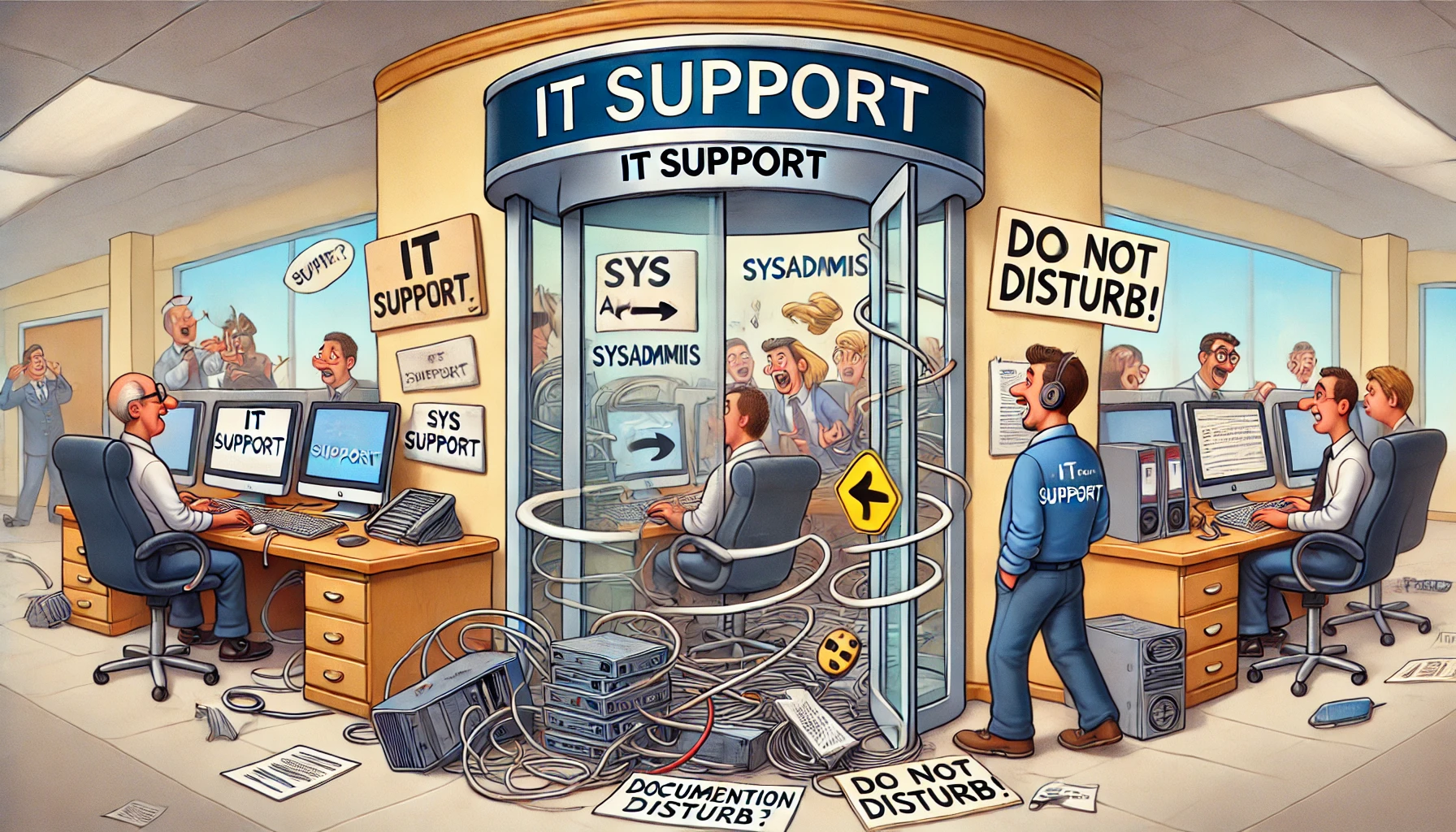
IT support functions like a well-oiled machine—not because it is efficient, but because people pass through it at alarming speed. New hires arrive, learn just enough to manage the most common issues, and then leave for better opportunities before they get too comfortable. The cycle repeats endlessly: recruit, train, overload with tickets, watch them leave, then start over.
The root cause is simple: cost. Businesses are reluctant to invest heavily in support, treating it as a necessary but expendable function. Salaries for first-line support are low [1], and career prospects within the role are limited, leading to most employees treating it as a stepping stone rather than a long-term career. As a result, the average employment tenure is often no more than a year or two [2]. Many use the role to finance their studies [3], further increasing turnover rates.
By the time an employee gains real experience, they realise they can earn more elsewhere or move up to a specialist role. This leads to an IT support paradox: those who get good at the job rarely stay in it.
The Knowledge Black Hole – Why the Same Problems Get Solved Again and Again
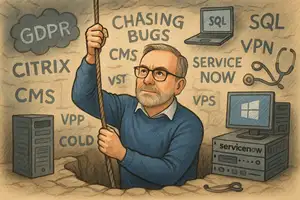
With employees cycling through support faster than documentation is maintained, knowledge transfer is minimal at best. Most businesses assume documentation will be written naturally as part of the job, which is as realistic as expecting users to read error messages before submitting a support ticket.
Even when documentation exists, it is often incomplete, outdated, or too generic to be useful. Studies have shown that documentation defects are common in software and IT systems, ranging from incorrect procedures to missing information [4]. Institutional knowledge disappears when experienced staff leave, and without proper documentation, new employees are forced to learn through trial and error [5].
Instead of structured documentation, most support teams rely on verbal instructions, scattered emails, and undocumented fixes known only to a few senior staff. These individuals become the sole custodians of critical knowledge—until they also leave, at which point the team must start from scratch.
The Great Disconnect – Why Specialists Never See the Full Picture
Support is meant to filter simple issues and escalate complex ones to system specialists. In practice, this process is flawed. Some issues that should be escalated never reach specialists because support staff do not recognise them as systemic problems. Instead, recurring issues are handled in isolation, with each technician resolving the symptoms rather than identifying the root cause.
There is also an element of hesitation when escalating. Support staff do not want to appear incompetent, so they attempt to solve issues beyond their expertise. This often results in workarounds rather than permanent solutions. By the time specialists do become involved, the issue has either escalated into a full outage or has been patched together with so many temporary fixes that identifying the original problem becomes nearly impossible.
When issues are escalated, specialists often dismiss them unless they are immediately reproducible. This creates a frustrating cycle where support reports an issue, only for specialists to claim they cannot act without further evidence. The result? Users are advised to "restart the system and see if it happens again."
Conclusion
IT support remains an essential yet deeply flawed function within most businesses. The high turnover rate ensures that knowledge is constantly lost, poor documentation exacerbates the problem, and the disconnect between support and specialists prevents long-term solutions. Businesses that fail to address these structural problems will continue to face inefficiencies, frustrated employees, and recurring technical issues.
Until companies prioritise knowledge retention, invest in sustainable documentation, and foster better communication between support and specialists, IT support will remain trapped in a cycle of firefighting rather than progress.
References
Some sources you can check, there are many more...
- TechPays – Entry-level IT support salaries range between €30,000–€36,000 in most of Europe.
- Centum Search – The average tenure in IT support is 1–2 years, often less in high-turnover environments.
- Eurostat – A significant percentage of IT support roles are filled by students financing their studies or using the job as a stepping stone into better tech careers.
- arXiv – Documentation is frequently outdated or inaccurate, leading to inefficiencies and repeated errors.
- Doakio (2023) – Poor documentation significantly slows down new hires and increases operational costs. (Archived at Internet Archive)
About This Post
This post is both an exploration of IT support's fundamental problems and a humorous reflection on the realities of working in first-line technical support. While written with a cynical tone, the issues discussed are based on real data and research. The goal is to shed light on the challenges faced by IT support teams and encourage organisations to take a more proactive approach to improving knowledge retention, documentation, and communication.